The Messianic movement: Who are we??
In the Messianic movement we seem to have an identity problem. Some think we should become Jewish, or adopt Jewish customs. Others think being Messianic means Christianity with a kipa and a tallit, replacing ‘Sunday service’ with ‘sabbath service’.
Many who have started out from Christianity and supposedly become ‘Messianic’ have moved onward and downward to one flavor or another of Orthodox Judaism, forsaking the Messiah altogether, in favor of non-biblical orthodox Jewish halacha (way of walking).
Some have come from orthodox Jewish families, and have thrown out the baby with the bathwater, forsaking even the small element of Torah halacha still remnant in Judaism, in favor of Christian practices.
Becoming Messianic is much more than exchanging one set of customs for another.
A very small minority have discovered the true vision of the Messiah, implementing a disciplined life, changing their walk to follow the halacha of Ben Elohim, the Son of Righteousness.
This blessed minority have undertaken a pattern of Tanak, Brit Chadasha, Hebrew language and historical studies to realize what the ‘perfecting of the kidushim’ actually means:
Let the proud be put to shame, For with lies they perverted me; But I study Your orders.
(Psa 119:78)
O how I love Your Torah! It is my study all day long. Your commands make me wiser than my enemies; For it is ever before me. I have more understanding than all my teachers, For Your witnesses are my study. I understand more than the aged, For I have observed Your orders.
(Psa 119:97-100)
I rise before dawn, and cry for help; I have waited for Your word. My eyes have gone before the night watches, To study Your word.
(Psa 119:147-148)
“As it is written in the Torah of Mosheh, all this evil has come upon us, and we have not entreated the face of יהוה our Elohim, to turn back from our crookednesses, and to study Your truth.
(Dan 9:13)
And the brothers immediately sent Sha’ul and Sila away by night to Beroia, who, having come, went into the congregation of the Yehuḏim. Now these were more noble than those in Thessalonike, who received the word with great eagerness, and searched the Scriptures daily, if these words were so.
(Act 17:10-11)
Do your utmost to present yourself approved to Elohim, a worker who does not need to be ashamed, rightly handling the Word of Truth.
(2Ti 2:15)
And it came to be when Aḇram was ninety-nine years old, that יהוה appeared to Aḇram and said to him, “I am Ěl Shaddai – walk before Me and be perfect.
(Gen 17:1)
“Therefore, be perfect, as your Father in the heavens is perfect.
(Mat 5:48)
And He Himself gave some as emissaries, and some as prophets, and some as evangelists, and some as shepherds and teachers for the perfecting of the set-apart ones, to the work of service to a building up of the body of the Messiah… (Eph 4:11-12)
In the process they have revealed to themselves their own nakedness, their sin that they have not known of because they didn’t think the instructions of the Father needed to be learned, or worse, they developed a hardness of heart that enabled them to ignore the sin in their lives that they once experienced guilt and shame about.
This produces a heartfelt desire to change one’s behavior to come into obedience to the instructions of the Creator. Once one begins to remove the chametz(leaven, representative of hypocrisy) from their life, the words of Messiah come alive and take shape:
“Not everyone who says to Me, ‘Master, Master,’ shall enter into the reign of the heavens, but he who is doing the desire of My Father in the heavens.
(Mat 7:21)
When you begin to experience victory over deeply ingrained habitual sin, your joy increases and your personal sin consequences decrease. Great encouragement begins to come into your heart.
Let’s take a look at the scriptures to uncover what it means to become ‘Messianic’.
And יהוה said to Abram, “Go yourself out of your land, from your relatives and from your father’s house, to a land which I show you. “And I shall make you a great nation, and bless you and make your name great, and you shall be a blessing! “And I shall bless those who bless you, and curse him who curses you. And in you all the clans of the earth shall be blessed.” So Abram left, as יהוה had commanded him, and Lot went with him. And Abram was seventy-five years old when he set out from Ḥaran. (Gen 12:1-4)
We see here that Avraham is our Messianic forefather and example. In other words, Avraham was challenged to leave behind everything he had known. Avraham avinu grew up and lived as an adult amidst the pagans of ancient Chaldea, whose descendants would centuries later become part of the Assyrian empire.
In Avraham’s day the idea that a ‘god’ would actually ‘speak’ to a man was unheard of. Yet Avraham not only heard the voice of Yehowah Elohim, he conversed with Him! When the Creator of heaven and earth called Avraham to leave everyone and everything that he had known, in order that he may receive an inheritance, a name, and a multitude of descendants, he listened and followed the Voice.
Much in the same way that Avraham avinu was called to follow an El that he had not seen, in order to inherit a reward that he could not know of in advance, we are called out of the nations of this world, to leave behind our sin and follow the same El that Avraham did!
We are promised, similarly, that we will inherit the same land that Avraham was promised. In fact, although we may not be blood descendants of Avraham, we are told that we will become part of the descendants of Avraham, Yitzchak and Ya’acov. (Read Romans 11)
For as many of you as were immersed into Messiah have put on Messiah. There is not Yehuḏi nor Greek, there is not slave nor free, there is not male and female, for you are all one in Messiah יהושע. And if you are of Messiah, then you are seed of Aḇraham, and heirs according to promise.
(Gal 3:27-29)
Because through Him we both have access to the Father by one Spirit. So then you are no longer strangers and foreigners, but fellow citizens with the set-apart ones and members of the household of Elohim, having been built upon the foundation of the emissaries and prophets, יהשוע Messiah Himself being chief corner-stone, in whom all the building, being joined together, grows into a set-apart Dwelling Place in יהוה, in whom you also are being built together into a dwelling of Elohim in the Spirit. (Eph 2:18-22)
Like Avraham, we are asked to step out in faith, not knowing what perils, trials, triumphs and tragedies may lay ahead. All that we are told is that salvation is a gift that we receive freely before stepping out on our journey, and that we must vow to put sin away from us and learn to walk in the ways of our Creator.
Similarly to Avraham, we are surrounded by the evidence of generations of sin, manifesting in the consequences of sin and death. Our culture today, while perhaps different technologically, is no less sinful that the generations of Noach’s descendants that lived in Avraham’s day.
Worse, we have inherited religious systems that propose to be the true path to eternal life, yet seem to fall far short in the light of even a cursory study of scripture.
Well did Yirmeyahu prophecy,
Jer 16:19 O יהוה, my strength and my stronghold and my refuge, in the day of distress the gentiles shall come to You from the ends of the earth and say, “Our fathers have inherited only falsehood, futility, and there is no value in them.”
In Avraham’s day Yehowah came seeking a heart that would separate from this culture of sin and death.
Avraham’s faith is tested
Gen 22:1-2 And it came to be after these events that Elohim tried Avraham, and said to him, “Abraham!” And he said, “Here I am.” And He said, “Take your son, now, your only son Yitzhak, whom you love, and go to the land of Moriyah, and offer him there as a burnt offering on one of the mountains which I command you.”
As awesome an avinu as Avraham was, he had no way of knowing that this ‘little’ test was being conducted so that you and I could understand the Ibri meaning of emunah or ‘faith’.
What did Avraham think was going to happen, and what heart attitude did his thoughts on this test reflect?
Gen 22:7-8 And Yitzhak spoke to Abraham his father and said, “My father!” And he said, “Here I am, my son.” And he said, “See, the fire and the wood! But where is the lamb for a burnt offering?” And Abraham said, “My son, Elohim does provide for Himself the lamb for a burnt offering.” And the two of them went together.
How did Avraham avinu score on the test?
Gen 22:9-10 And they came to the place which Elohim had commanded him,
and Abraham built an altar there and placed the wood in order. And he bound
Yitzhak his son and laid him on the altar, upon the wood. And Abraham stretched
out his hand and took the knife to slay his son…
A perfect score…
No separation between Instruction and obedience! This is exactly the kind of heart that Yehowah was seeking!
As a parent, the deliberate slaying of an only son is as foreign a concept as I can think of. Yet Avraham had already seen enough to trust his Creator with the most important possession that he had.
We get a deeper glimpse into the heart of Avraham’s ‘extreme’ faith from the writings of Rav Shaul in his letter to the brethren in Yerushalayim:
By belief, Avraham, when he was tried, offered up Yitsḥaq, and he who had received the promises offered up his only brought-forth son, of whom it was said, “In Yitsḥaq your seed shall be called,” reckoning that Elohim was able to raise, even from the dead, from which he received him back, as a type.
(Heb 11:17-19)
Avraham was aware of the salvation of his ancestor Noach and Noach’s family after the destruction of all life by the flood, save what was placed in the Ark.
Avraham understood that Yehowah has the ability to create life from nothing, as well as the ability to raise the dead.
Avraham remembered that Yitzhak’s life – as well as his own – was a gift that had been given and preserved only by the Hand of the Almighty, and that one lives and dies at the behest of his Creator.
How does the example of Avraham’s life demonstrate the fullness of becoming ‘Messianic’? Let’s return to the letter to the brethren in Yerushalayim for the answer:
By belief, Aḇraham obeyed when he was called to go out to the place which he was about to receive as an inheritance. And he went out, not knowing where he was going.
By belief, he sojourned in the land of promise as a stranger, dwelling in tents with Yitsḥaq and Yaʽaqoḇ, the heirs with him of the same promise, for he was looking for the city having foundations, whose builder and maker is Elohim.
By belief also, Sarah herself was enabled to conceive seed, and she bore a child when she was past the normal age, because she deemed Him trustworthy who had promised. And so from one, and him as good as dead, were born as numerous as the stars of the heaven, as countless as the sand which is by the seashore. In belief all these died, not having received the promises,but seeing them from a distance, welcomed and embraced them, and confessed that they were aliens and strangers on the earth. For those who speak this way make it clear that they seek a fatherland. And yet, if they had indeed kept remembering that place from which they had come out, they would have had the chance to return. But now they long for a better place, that is, a heavenly. Therefore Elohim is not ashamed to be called their Elohim, for He has prepared a city for them.
By belief, Aḇraham, when he was tried, offered up Yitsḥaq, and he who had received the promises offered up his only brought-forth son, of whom it was said, “In Yitsḥaq your seed shall be called,” reckoning that Elohim was able to raise, even from the dead, from which he received him back, as a type.
(Heb 11:8-19)
Through the faith of Avraham avinu we were given the greatest glimpse of the purpose of the first coming of our Messiah Yehoshua, that is for an only begotten, sinless Son to be made an offering on behalf of the sins of us all, one righteous, sinless offering for all the sins of all mankind, for all time.
Yet Avraham would not be allowed to offer his only begotten son by Sarah, for this special task was reserved solely for the only Son of Yehowah born of a woman.
Is your heart prepared to be ‘Messianic’? How much have you been given, that you know you cannot keep, that you are willing to give away at the command of the Creator of the universe?
The Messianic walk is not a weekly group activity. It is a moment by moment personal activity; we are to be fully engaged in walking with the Messiah, every moment of every day of our lives. When called to give, even of our very lives, we must be prepared to achieve a perfect score, every time.
How are your grades?
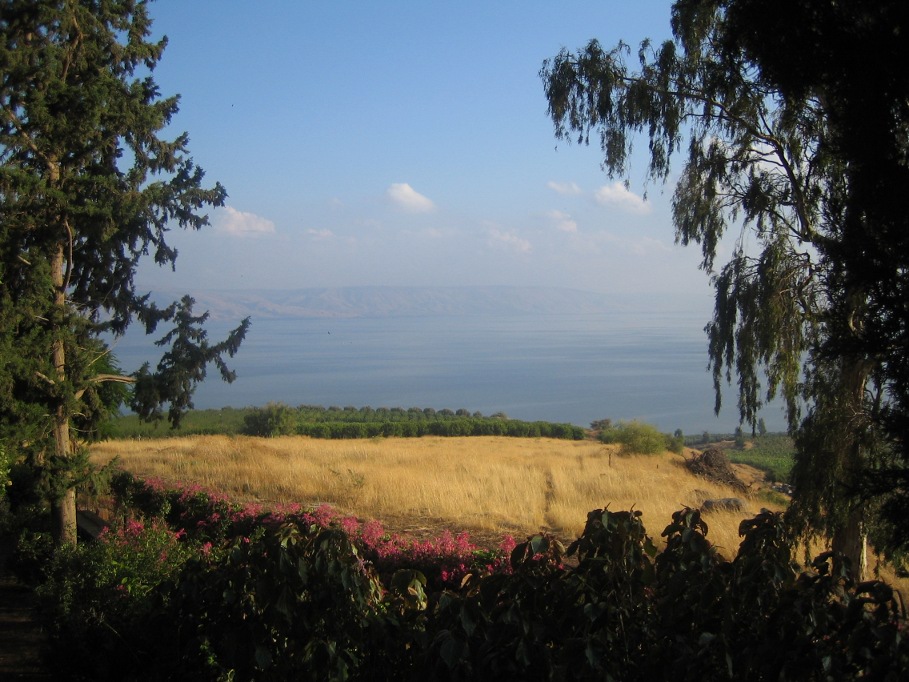
 Yehoshua's Talmidim